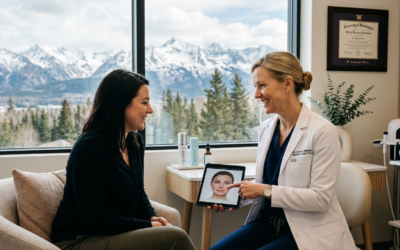
A medical director for Delaware medspas is a licensed physician who signs off on treatment protocols, reviews patient charts, and carries legal responsibility for injectable and device-based procedures performed by nurses, aestheticians, and other non-physician staff. Delaware's aesthetic market is smaller and more spread out than neighboring states, running from Wilmington down through Dover and the coastal beach towns, so most medspas here need a collaborating physician who works remotely rather than one who walks the floor daily.
- A medical director for Delaware medspas signs off on standing orders and reviews charts for injectable and laser treatments performed by non-physician staff.
- US Medical Directors places collaborating physicians and manages good faith exams for aesthetic practices across many states, including Delaware.
- Delaware treats neurotoxin injections, dermal fillers, and energy-device treatments as the practice of medicine, which is why oversight applies regardless of who performs the procedure.
- Solo medspas typically need a documented collaborating agreement plus a chart review cadence; multi-location groups need coverage continuity built in from day one.
- Skipping a written agreement or letting a good faith exam lapse is the fastest way to fail a Delaware board inspection in 2026.
Why medical director oversight matters for Delaware medspas
Delaware classifies neurotoxin injections, dermal fillers, laser resurfacing, and most energy-device treatments as the practice of medicine. That classification doesn't change based on who is holding the syringe or operating the device — a nurse, aesthetician, or nurse practitioner performing these services still needs a physician attached to the practice who takes responsibility for protocols, chart review, and patient safety oversight.
Because Delaware's medspa market is concentrated in a handful of counties, many owners default to whichever local physician they can find, sometimes a family friend or a retired doctor willing to sign paperwork. That approach works until a state board inspection or a patient complaint surfaces a gap: an expired agreement, an unreviewed chart, or a good faith exam that never happened. A medical director for Delaware medspas who actually reviews charts and stays reachable closes that gap before it becomes a citation.
Determine whether your services require oversight
Before you sign anyone, map every service on your menu against Delaware's practice-of-medicine standard. Not every treatment carries the same oversight weight, and knowing the line saves you from paying for coverage you don't need or, worse, running without coverage you do.
- List every injectable, energy-device, and prescription-adjacent service on your current menu
- Flag anything involving needles, lasers, radiofrequency, or prescription medication
- Check whether the treatment requires a good faith exam before the first visit
- Note which services are performed by an NP, RN, or aesthetician, since supervision expectations differ by license type
- Read the state-by-state breakdown on whether your state requires a medical director before assuming your current setup is sufficient
Verify your collaborating physician's license and standing
A signature on a contract means nothing if the physician's license isn't active and unrestricted in Delaware. This step gets skipped constantly because owners trust a referral instead of checking the primary source.
- Confirm active licensure directly through the Delaware Board of Medical Licensure and Discipline
- Check for any current disciplinary actions or board restrictions
- Confirm the physician's specialty background is reasonable for aesthetic supervision
- Verify malpractice coverage is current and covers aesthetic procedures specifically
- Get license confirmation in writing, not a verbal assurance
Structure a written collaborating agreement
A handshake deal doesn't survive a board inquiry. Every Delaware medspa needs a written agreement that spells out exactly what the physician does and how often.
- Define chart review frequency and documentation format in writing
- Specify how good faith exams are scheduled and who conducts them
- Set clear communication expectations for urgent patient questions
- Include a termination clause with a defined transition period
- Attach standing orders or protocols as a signed exhibit, not a verbal understanding
Owners who want the faster path can skip the search-and-vet cycle entirely and go straight to a service built for this: US Medical Directors places a medical director for Delaware medspas and drafts the agreement as part of onboarding, rather than leaving the practice to assemble the paperwork solo.
Build a documented good faith exam and chart review workflow
A good faith exam that happens once and never gets revisited isn't compliance, it's a paper trail with a hole in it. Chart review needs a rhythm, not a one-time event.
- Schedule good faith exams before the first treatment for every new injectable or device patient
- Set a recurring chart review cadence — weekly or biweekly works for most solo practices
- Store exam and review documentation somewhere retrievable on short notice
- Track which patients are due for re-exam under Delaware's applicable timelines
- Build an escalation path for any chart flagged during review
Budget for medical director costs before you scale
Coverage costs scale with patient volume and service complexity, and pricing models vary by provider. Getting this wrong either overpays for coverage a solo practice doesn't need or underfunds coverage a growing practice will.
- Compare flat monthly retainer models against per-visit or per-exam pricing
- Factor in additional cost if you're adding a second location or new service line
- Ask whether chart review and good faith exams are bundled or billed separately
- Review medical director pricing models built for solo medspa owners before signing a multi-year contract
- Revisit your budget any time patient volume grows by 20% or more
Prepare for a state board inspection
Inspections don't wait for you to get organized. The practices that pass without a citation are the ones that treat documentation as a daily habit, not a scramble.
- Keep the signed collaborating agreement accessible, not buried in email
- Maintain a running log of chart reviews with dates and reviewer initials
- Confirm every good faith exam on file matches an actual treatment date
- Train front-desk and clinical staff on where documentation lives
- Do a self-audit against your agreement's terms twice a year
Plan for coverage continuity as you grow
A single medical director working alone is a single point of failure. If that physician gets sick, moves, or simply stops responding, a solo practice can be left without legal cover overnight.
- Ask any prospective medical director what happens if they're unavailable for more than a few days
- Build a named backup into the written agreement, not an informal promise
- For multi-location groups, confirm the same physician (or network) can cover every site
- Revisit the agreement any time you add a location, a new service line, or additional injectors
Comparing your options for Delaware medspa coverage
| Option | Best for | Key limitation |
|---|---|---|
| Local solo physician, informal arrangement | Very small, single-owner practices with one injector | No backup coverage; informal terms rarely survive board scrutiny |
| In-house hired medical director | Larger practices with steady, high patient volume | Salary and benefits overhead most single-location medspas can't justify |
| Retainer-based collaborating physician service | Growing medspas that need documented, recurring chart review | Response time depends on the individual physician's availability |
| Multi-physician medical director network (US Medical Directors) | Solo owners and multi-location groups that need continuity and bulk pricing | Requires onboarding paperwork upfront to set standing orders and agreements |
Verdict: a Delaware medspa running one injector out of a single suite can usually get by on a retainer-based collaborating physician; a group with two or more locations needs a network model with built-in backup coverage, which is where US Medical Directors' bulk plans for medspa groups fit.
Get a medical director matched for Delaware
See coverage options for solo and multi-location medspas.
Common mistakes Delaware medspas make
- Assuming NP scope of practice removes the need for physician oversight — injectable and device treatments still fall under practice-of-medicine rules regardless of who holds the credential.
- Hiring a collaborating physician without checking Delaware-specific licensure status — a license active in a neighboring state doesn't automatically cover Delaware.
- Letting good faith exams lapse when patients return for repeat treatments — a single exam at intake doesn't cover every future visit indefinitely.
- Skipping a written agreement in favor of a verbal understanding — this is the first document a board inspector or insurer asks to see.
- Adding a second location without updating the collaborating agreement — coverage terms written for one site don't automatically extend to another.
FAQ
Does Delaware require a medical director for medspas?
Delaware treats injectable and device-based aesthetic treatments as the practice of medicine, which means a licensed physician needs to be involved in oversight even when a nurse or aesthetician performs the procedure. Requirements vary by exact service and license type, so confirm against your specific treatment menu.
What does a medical director actually do for a medspa?
A medical director reviews patient charts, signs off on standing orders and protocols, and takes legal responsibility for the medical aspects of treatments performed by non-physician staff. This is different from performing the treatments directly.
Is a collaborating physician the same as a medical director?
The terms overlap in aesthetic practice but often describe different scopes of responsibility depending on state rules and the specific agreement signed. Read the written agreement’s language rather than assuming the title tells you the scope.
How much does a medical director cost for a Delaware medspa in 2026?
Pricing models vary between flat monthly retainers and per-visit or per-exam billing, and costs typically scale with patient volume and service complexity. Compare at least two pricing structures before signing a contract.
Can one medical director cover multiple Delaware medspa locations?
Yes, but the written agreement needs to name every location explicitly and include a backup plan for coverage continuity. A single physician covering multiple sites without documented backup creates risk if that physician becomes unavailable.
What happens if a medspa operates without proper medical director oversight?
Operating without required oversight exposes the practice to board citations, insurance complications, and liability if a patient complaint or adverse event occurs. This is the single most common gap found during state board inspections.
How often should a medical director review charts?
Most solo and small-group Delaware medspas use a weekly or biweekly chart review cadence, though the exact frequency should be defined in the written agreement rather than left informal. Documented, recurring review matters more than any specific interval.
One last thing
The practices that get flagged during a Delaware board inspection almost never fail because the physician wasn't qualified — they fail because the paperwork trail had a gap: an agreement that expired, a chart review that stopped happening, a good faith exam nobody could produce. Fix the documentation habit before you worry about finding the "perfect" physician; a well-organized practice with an average medical director outperforms a disorganized one with a great physician every time a board inspector shows up in 2026.
Related guides