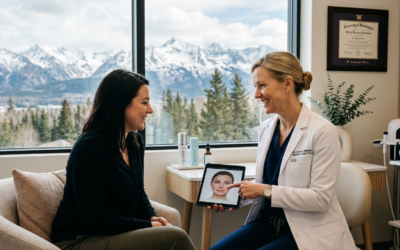
Montana medspas need a licensed physician attached to every Botox unit, filler syringe, and prescription-based treatment on the menu, whether that physician works on staff or through a remote collaborating agreement. Montana's low population density outside Billings, Missoula, and Bozeman means most medspa owners can't find a local doctor willing to sign standing orders, which makes remote medical director coverage the practical default in 2026 rather than a workaround.
- A medical director for Montana medspas signs off on injectables, standing orders, and good faith exams before treatment starts.
- Montana’s rural geography makes remote collaborating physician coverage the standard fix for practices outside the three largest cities.
- Solo RN-owned medspas typically need less coverage than multi-location groups preparing for a state board inspection.
- US Medical Directors places licensed physicians with Montana medspas for chart review, good faith exams, and standing order support.
Why medical director oversight matters for Montana medspas
Botulinum toxin and injectable fillers are prescription products no matter who administers them, and estheticians can't inject at all under any state's rules. In Montana, an RN or nurse injector performing these treatments needs a physician-signed standing order and ongoing chart review, and a nurse practitioner running the day-to-day clinic often still needs a collaborating physician relationship for the aesthetic scope specifically, separate from general practice authority.
The practical problem in Montana is supply. Physicians willing to take on medical director duties for a medspa are concentrated in a handful of cities, and a practice in a smaller town often has no realistic local candidate. That's exactly why you need to determine whether your state requires a medical director before you build a service menu around treatments you can't legally cover.
A Montana medspa without a signed collaborating agreement is one board complaint away from a shutdown, regardless of how good the injector is. That single sentence is the reason oversight isn't optional paperwork in 2026 — it's the difference between a functioning clinic and a closed one.
Building medical director coverage in Montana, step by step
Confirm which of your treatments trigger oversight
Don't assume your whole menu falls under one rule. Botox, dermal fillers, and prescription weight loss injections trigger physician delegation differently than laser hair removal or chemical peels.
- List every service on your menu and flag which ones involve a prescription drug or device requiring a standing order
- Check whether your provider type (RN, LPN, esthetician, NP) is legally allowed to perform each treatment at all
- Note any treatment you're planning to add in 2026, such as semaglutide or PDO thread lifts, since new services change your oversight scope
- Confirm rules separately for any location that also offers IV therapy or hormone pellets, which carry their own documentation requirements
Verify the collaborating physician's license before signing anything
A signed agreement with an unlicensed or lapsed physician protects nobody. Run this check yourself first, free, before you pay for anything.
- Pull the physician's license status directly from the Montana medical board's public lookup
- Confirm the license covers the specialty scope relevant to aesthetics, not just general practice
- Ask for proof of active malpractice coverage before signing
- Check for any pending disciplinary action tied to the license number
- Work through the steps to verify a collaborating physician's license if you want a documented checklist rather than a one-off search
Draft standing orders and the collaborating agreement
A verbal understanding with a physician friend isn't a standing order. Montana boards expect a written document naming the physician, the scope of delegated procedures, and the review cadence.
- Name every delegated procedure explicitly rather than writing "aesthetic services" as a blanket term
- Set a chart review frequency (weekly, biweekly, monthly) matched to your patient volume
- Include an emergency contact protocol for adverse reactions
- Set renewal and termination terms so the agreement doesn't quietly lapse
- If you're building this for the first time, hire a medical director using a structure built for aesthetic practices rather than a generic employment contract
Schedule good faith exams and chart reviews on a real calendar
A good faith exam isn't a one-time event at intake — it's tied to specific treatments and repeats on schedule.
- Book the initial good faith exam before the first injectable appointment, not after
- Set a recurring schedule for repeat exams tied to treatment type, since Botox differs from weight loss injectables
- Log every chart review with a timestamp and physician signature
- Store documentation somewhere a board inspector can pull it in minutes, not days
Budget for the real cost of oversight, not just the sticker number
Coverage costs scale with patient volume, number of locations, and how many exam types you need signed off.
- Model costs against your current monthly patient count, not a rough guess
- Factor in extra review cycles if you're adding tirzepatide, semaglutide, or hormone therapy
- Compare a flat monthly retainer against per-visit pricing structures
- Ask any provider directly how the fee changes if you open a second Montana location
Prepare for a state board inspection before one is scheduled
Boards don't give much notice. The medspas that pass inspections have already run the audit on themselves.
- Confirm every provider's license and certification file is current and physically accessible
- Pull a sample of charts and check they match the collaborating agreement's stated review cadence
- Verify good faith exam records are signed, dated, and complete
- Walk through your standing orders line by line and check nothing has quietly expanded past what's signed
Get Montana medical director coverage set up
Physician oversight, chart review, and good faith exams for aesthetic practices.
Comparing medical director options for Montana medspas
| Option | Best for | Key limitation |
|---|---|---|
| Local physician on staff | Practices inside Billings, Missoula, or Bozeman with an existing relationship | Very few candidates willing to take the role outside the three largest cities |
| Independent part-time physician | Solo owners who only need periodic sign-off | Coverage gaps if the physician takes on other clients or relocates |
| Remote collaborating physician network (US Medical Directors) | Rural and multi-location Montana medspas that can't rely on local supply | Requires comfort with telehealth-based chart review rather than in-person rounds |
US Medical Directors is built for medspas that can't find local coverage, which describes most of Montana outside its three biggest cities. Solo owners in smaller towns get the same standing order and good faith exam structure as a group practice in Billings, without waiting on a local physician to say yes.
Common mistakes Montana medspas make with oversight
- Assuming NP independent practice covers injectables. General practice authority for a nurse practitioner doesn't automatically extend to delegated aesthetic procedures that still require a standing order.
- Hiring an out-of-state physician who isn't licensed in Montana. A collaborating agreement only holds up if the physician's license covers the state the medspa operates in.
- Treating the good faith exam as a one-time intake form. Boards expect repeat exams tied to treatment type, not a single signature at onboarding.
- Underbudgeting when adding a second location in Bozeman or Missoula. Coverage costs and review cadence don't stay flat once patient volume across two sites grows.
- Skipping documentation for telehealth weight loss visits. Semaglutide and tirzepatide programs need the same chart review discipline as in-person injectables, and gaps here are a common inspection flag in 2026.
FAQ
Does Montana require a medical director for medspas?
Montana requires physician-level oversight for prescription-based aesthetic treatments, including Botox and dermal fillers, when administered by a non-physician provider. The exact structure depends on whether your provider is an RN, NP, or PA, but a signed collaborating agreement is standard.
Can a nurse practitioner run a Montana medspa without a collaborating physician?
General NP practice authority doesn’t automatically cover delegated aesthetic procedures. Most Montana medspas still need a collaborating physician relationship specifically for injectables and other prescription-based treatments.
How often do good faith exams need to happen?
Good faith exams repeat on a schedule tied to treatment type rather than happening once at intake. The cadence should be written into the collaborating agreement so both sides know when a new exam is due.
What happens during a Montana medspa board inspection?
Inspectors typically check provider licenses, standing orders, chart review records, and good faith exam documentation. Practices that keep this paperwork current pass faster than those reconstructing records under pressure.
Is remote collaborating physician coverage workable in Montana?
Yes, telehealth-based chart review and standing order oversight is the practical option for Montana medspas outside Billings, Missoula, and Bozeman where local physician supply is thin. The documentation requirements stay the same as with an on-site director.
How much does a medical director cost for a Montana medspa in 2026?
Cost depends on patient volume, number of locations, and how many exam types need sign-off, with providers typically offering either a flat monthly retainer or per-visit pricing. Ask for a quote based on your actual monthly patient count rather than an industry average.
What’s the difference between a medical director and a collaborating physician?
A medical director typically holds broader oversight of clinical protocols and compliance across the practice, while a collaborating physician relationship is often scoped to specific delegated procedures for a specific provider. Many Montana medspas use one physician to fill both roles.
One last thing
Montana's medspa market is smaller and more spread out than almost any other state, so the standard advice to find a local doctor simply doesn't work for a lot of owners here. The practices doing this right in 2026 aren't waiting for a physician to move to their town — they're building the collaborating relationship remotely from day one and treating it as infrastructure, not a favor.
Related guides
- How to prepare a compliance checklist before launching a medspa
- Best medical director pricing models for solo medspa owners